Price often dominates procurement conversations, but “cheap” does not necessarily mean “suitable.” Tubular motors involve mechanical, electrical, and safety considerations. Short-term decisions may be driven by price; long-term value is determined by workmanship and compliance. In this article we compare a KYOK sample against two competitors (B and C) through teardown analysis, to help procurement make informed decisions on structure, materials, lubrication, limit methods, wiring, and power cable compliance.
Quick Primer — Seven Core Modules and Main Components
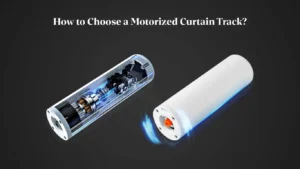
A tubular motor consists of seven coaxial modules: control wiring assembly, stator, rotor, planetary gearbox, electromagnetic brake (optional), limit mechanism, and end cap. Key components and their functions:

Stator windings: Precisely wound copper wire; the winding process and insulation determine motor efficiency and lifespan.

Rotor / rotor shaft: Rotates with the magnetic field and transmits torque to the output shaft.

Output shaft + planetary gearbox: Converts high-speed/low-torque motor output into low-speed/high-torque output using a compact planetary gear set.

End caps / bearing assembly: Fix the output shaft and seal the interior, influencing noise and lifetime.

Control & drive assembly: Includes control PCB, motor driver, and auxiliary sensors; determines limit method, intelligence features, and safety logic.

Housing & cooling fins: Provide mechanical protection and increase heat dissipation area for thermal stability during continuous operation.
Teardown Highlights (KYOK vs B vs C)
Note: B and KYOK samples are priced above USD 15; C is below USD 10.. Findings below are based on sample teardown and visual inspection. For procurement, always request batch QC reports and third-party test data to confirm consistency.
1. Exterior and Material
C (low-price): Although the 50 Nm model uses a metal shell, the gearbox cover shows rust — indicating inadequate anti-corrosion treatment or coating.


B / KYOK: Better surface finish and corrosion protection were observed.
2. Gearbox and Lubrication

B: Uses a generous amount of grease inside the gearbox, providing better lubrication and protection for gears — beneficial for longevity and noise reduction.
KYOK: Uses a helical tooth profile on the first stage to reduce noise; subsequent stages use spur gears (which can be slightly louder in some conditions).
C: Some plastic parts show yellowing and grease appears oxidized — signs of poor grease formulation or sealing, indicating declining lubrication performance over time.
3. Limit Method (impacts intelligence and UX)

C — Mechanical Limit (gear/screw/micro-switch):
Suitable for: Non-smart, cost-sensitive scenarios where simplicity and physical reliability are prioritized.
Pros: Strong anti-interference (mechanical trigger unaffected by EMI or signal loss); retains limit setting in power loss (physical lock); good environmental tolerance; low cost and easy to repair.
Cons: Accuracy degrades over time due to mechanical wear; adjusting travel is cumbersome; limited functionality and larger internal volume that precludes adding smart modules.
This type of limit mechanism essentially requires a person to use a tool to manually turn a stop, and it cannot guarantee precise positioning — after all, the shade may still be moving when someone reaches in.
Also, despite how compact the motor looks in the teardown photos, there is actually no room to add extra features (for example, Wi-Fi, voice control, Matter, etc.).
B / KYOK — Electronic Limit with Wi‑Fi module:
Suitable for: Smart homes, commercial spaces, and projects requiring remote control and automation.
Pros: Smart control via App and voice assistants; flexible travel settings and multi-segment positioning; real-time status feedback (position, power consumption); strong scene automation and ecosystem integration.
Cons: Dependent on network and power (remote control and automation fail during outages); higher cost and potential compatibility issues across brands; electronic stability must be validated.
KYOK and B’s electronic limit systems are much more convenient — limits can be set simply using the remote’s up/down buttons. Although the motor appears longer inside in the teardown photos, that extra internal length is intentional: it provides space to add different functional modules per customer requirements (e.g., Wi-Fi, voice control, Matter), making the unit more modern and flexible.

4. Control Board and Wiring Layout

C: Messy internal wiring and use of crimped terminal blocks that may loosen — increasing the risk of poor contact or disconnection.

B: Clean wiring layout with dedicated cable clips for strain relief.

KYOK: The wiring is tidy and the control board is fully enclosed, which improves electromagnetic-interference resistance and overall safety. Don’t underestimate that enclosure — it is flame-retardant. At comparable price points to competitors, our motor delivers superior value for money.
5. Power Cable and Compliance
This is actually the easiest way to identify it — you can tell without having to disassemble the unit.

KYOK power cable: Fully labeled and traceable — CCC certification number, manufacturer information, IEC compliance, RVV type, voltage rating (300/500 V), etc.
As a brief supplement: the CCC certification number refers to China’s mandatory safety certification (China Compulsory Certification) and indicates that a product or accessory has passed required national safety and EMC tests; manufacturer information (name, factory code, batch number) provides traceability and is essential for quality control and recalls; IEC compliance means the product meets relevant International Electrotechnical Commission standards (e.g., insulation, flammability, or conductor specifications) and should be supported by the corresponding test report or standard number; RVV denotes a type of flexible PVC-sheathed multi-core cable (commonly annotated as RVV + cores × cross-section) and implies suitability for flexible power connections; and a voltage rating such as “300/500 V” specifies the cable’s nominal working voltage and the insulation class it must meet. In procurement, always request the actual certificates and test reports, verify certificate numbers against issuing bodies, and confirm that the stated cable type and voltage rating match your application.

B power cable: Also marked with CCC/IEC and manufacturer information.

C power cable: Lacks manufacturer mark and CCC certification; marked H03VV-F (suitable for low-power devices). The cable color/material (black) may be chosen to conceal aging; lack of certification presents compliance and safety risks.
Quick Comparison Table For the Tubular motor
| Dimension | KYOK | B Company | C Company |
|---|---|---|---|
| Price | > USD 14.20 | > USD 14.20 | < USD 9.94 |
| Housing / Gearbox | Aluminum / good anti-corrosion treatment | Metal / good processing | Metal cover shows rust (poor anti-corrosion) |
| Gear profile | 1st stage helical (low noise) | — | Plastic parts yellowing; poor grease |
| Grease quality | Controlled and adequate | Grease-rich | Oxidized grease; poor lubrication |
| Limit method | Electronic limit + Wi-Fi | Electronic limit + Wi-Fi | Mechanical limit |
| Wiring layout | Tidy with full-cover protection | Neat with clips | Chaotic; crimp terminals |
| Power cable compliance | CCC / IEC / Manufacturer info | CCC / IEC / Manufacturer info | No manufacturer mark; no CCC |
| Recommended scenarios | Smart home, long-term reliable use | Smart home, mid-to-high end | Budget, non-smart short-term use |
Purchase Recommendation
If price-sensitive and non-smart environment: C’s high-torque model is an option, but thoroughly inspect grease, wiring, and power cable compliance. Suitable for short-term or low-complexity deployments.
If you need stable smart home integration, low noise and long-term reliability: choose B or KYOK. Both provide stronger guarantees on safety, workmanship, and intelligent features.
If noise, life-cycle, and compliance matter (hotels, hospitals, commercial spaces): prefer KYOK (or equivalent-tier suppliers)
Why Choose KYOK’ Tubular motor for roller shutter
- Attention to craft: KYOK uses a helical profile on the first stage to reduce operational noise — ideal for noise-sensitive residences and hospitality projects.
- Robust protection & stability: full-cover protection for control boards and neat wiring reduce risk of poor contact and EMI issues.
- Traceable, compliant cabling: power cables bear CCC / IEC markings and manufacturer information, minimizing compliance and safety risks.
- Smart integration ready: supports electronic limits and Wi‑Fi modules for easy integration into mainstream smart home ecosystems.

Tubular Motor For Roller Shutter
The YZM25T-1.2N/35R is a high-performance tubular motor designed for space-constrained applications requiring reliable linear motion. This compact 430mm unit delivers 1.2N.m torque at adjustable 20/30/35 RPM speeds with ultra-quiet 30dB operation. Engineered for roller shutters, awnings, and projection screens, it features universal 100-240V compatibility, IP42 protection, and robust performance across extreme temperatures (-20℃ to +60℃). With unlimited rotation cycles and 4.5kg load capacity, this tubular motor offers precision movement in a minimal footprint, making it ideal for smart home and commercial automation systems requiring intermittent-duty operation (<4min continuous use).
Tubular Motor Advantages:
– `Space-Optimized Design`: 430mm cylindrical form factor for tube integration
– `Smooth Linear Motion`: Precision torque delivery (1.2N.m) for curtain/shutter systems
– `Silent Operation`: 30dB noise level for residential applications
– `Versatile Mounting`: Unlimited rotation capability for flexible installation
– `All-Environment Ready`: IP42 protection and wide temperature tolerance
Ideal for motorized window treatments, garage doors, and automated shading systems where compact dimensions and reliable linear actuation are critical.
Price is only one part of the procurement decision. If you require stability, low-noise performance, smart connectivity and compliance assurance, KYOK is the better choice. Contact us to request samples or to schedule a factory visit.
Email: [info@fskyok.com]
Address: Factory No.1, Plot C35, “Jiangli” Area, Nansha Economic Cooperative, Danzhao Town, Nanhai District, Foshan, Guangdong, China